Description
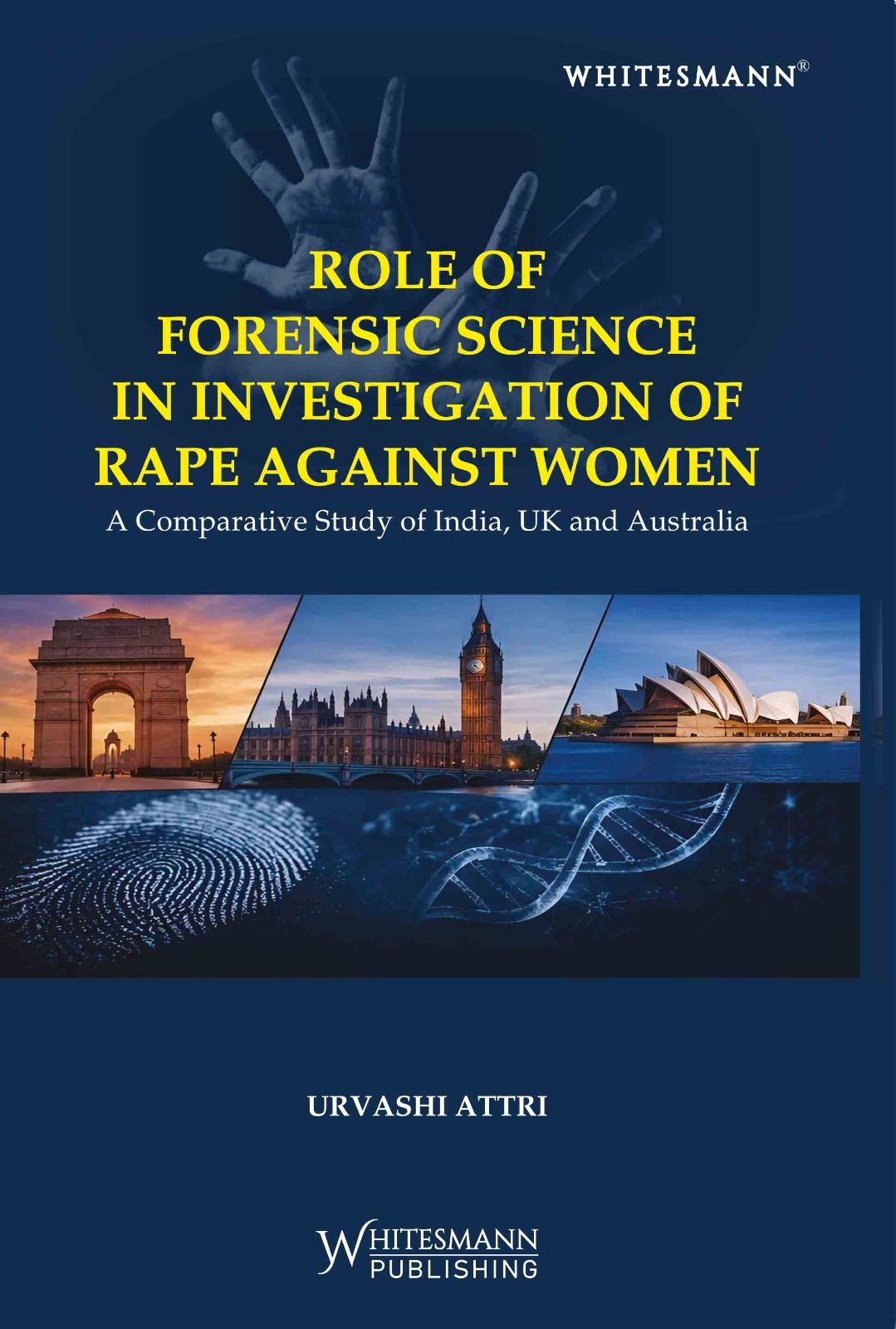
Role of Forensic Science in Investigation of Rape Against Women: A Comparative Study of India, UK and Australia
Covers:
- Chapter 1 – Introduction: Frames rape as a crime, introduces forensic science’s role, and surveys the scale of the problem across all three countries, citing NCRB, Rape Crisis England & Wales, and Australian Bureau of Statistics data.
-
Chapter 2 – Importance of Forensic Evidence in Rape Cases: The book’s largest section—covers legal definitions of rape and consent, criminological theories, medical examination procedures, the rape investigation kit, the banned two-finger test, and an extensive survey of forensic disciplines (DNA, toxicology, trace evidence, digital forensics, pathology, and more), plus special contexts like marital rape, live-in relationships, child victims, and drug-facilitated rape.
-
Chapter 3 – Legal Provisions: Analyses Indian statutes (BNS, BNSS, BSA, POCSO, SC/ST Act), comparing the new criminal codes to their predecessors (IPC, CrPC, Evidence Act).
-
Chapter 4 – International and National Perspective: Compares medical examination practices and legal frameworks across India, UK, and Australia, and surveys international conventions (CEDAW, Istanbul Convention, UDHR, ICCPR, etc.) and national schemes (Niti Aayog, Nirbhaya Fund, Beti Bachao Beti Padhao).
-
Chapter 5 – Conclusion and Suggestions: Synthesises findings and offers policy recommendations for strengthening forensic and legal responses to rape.